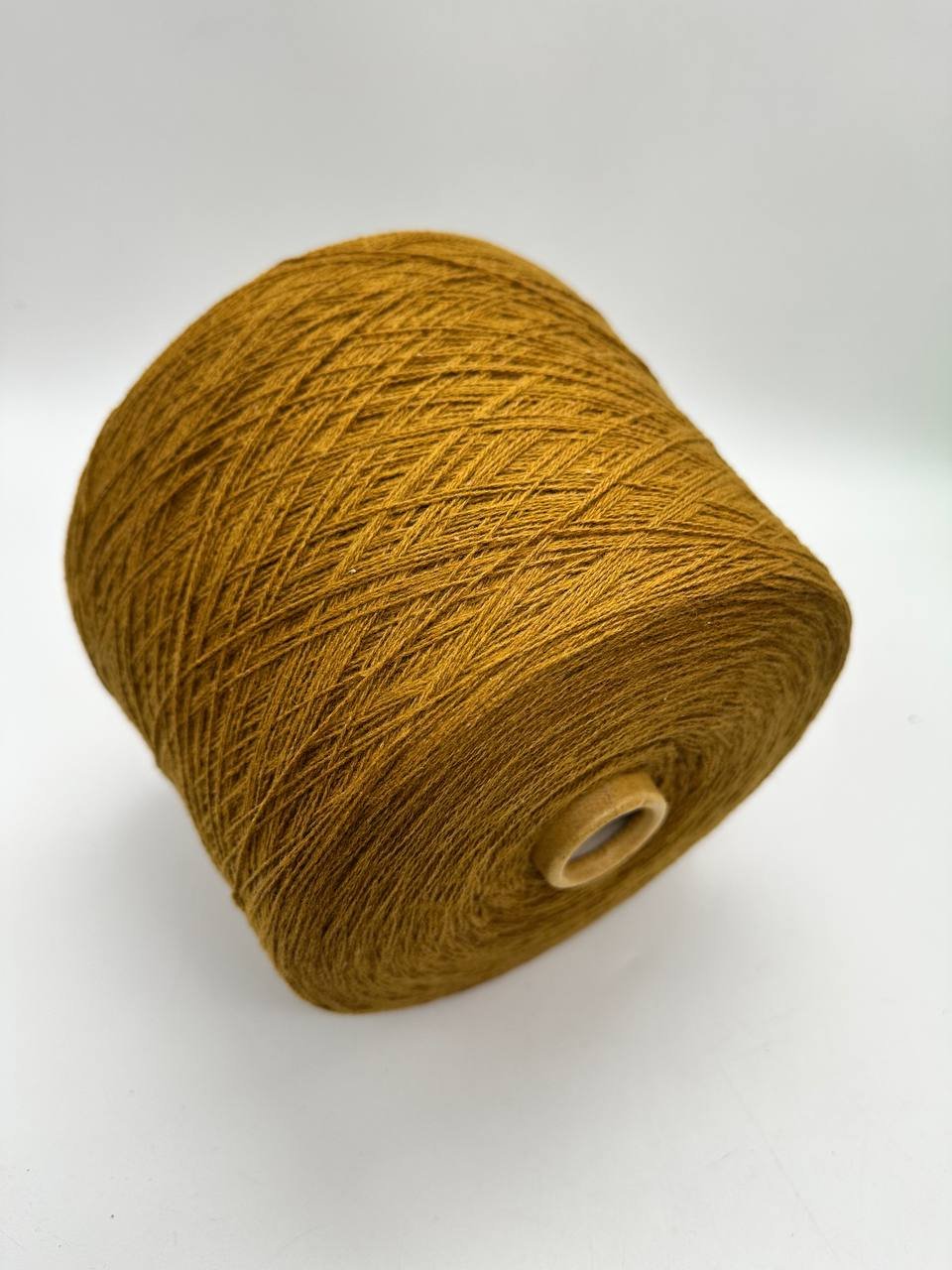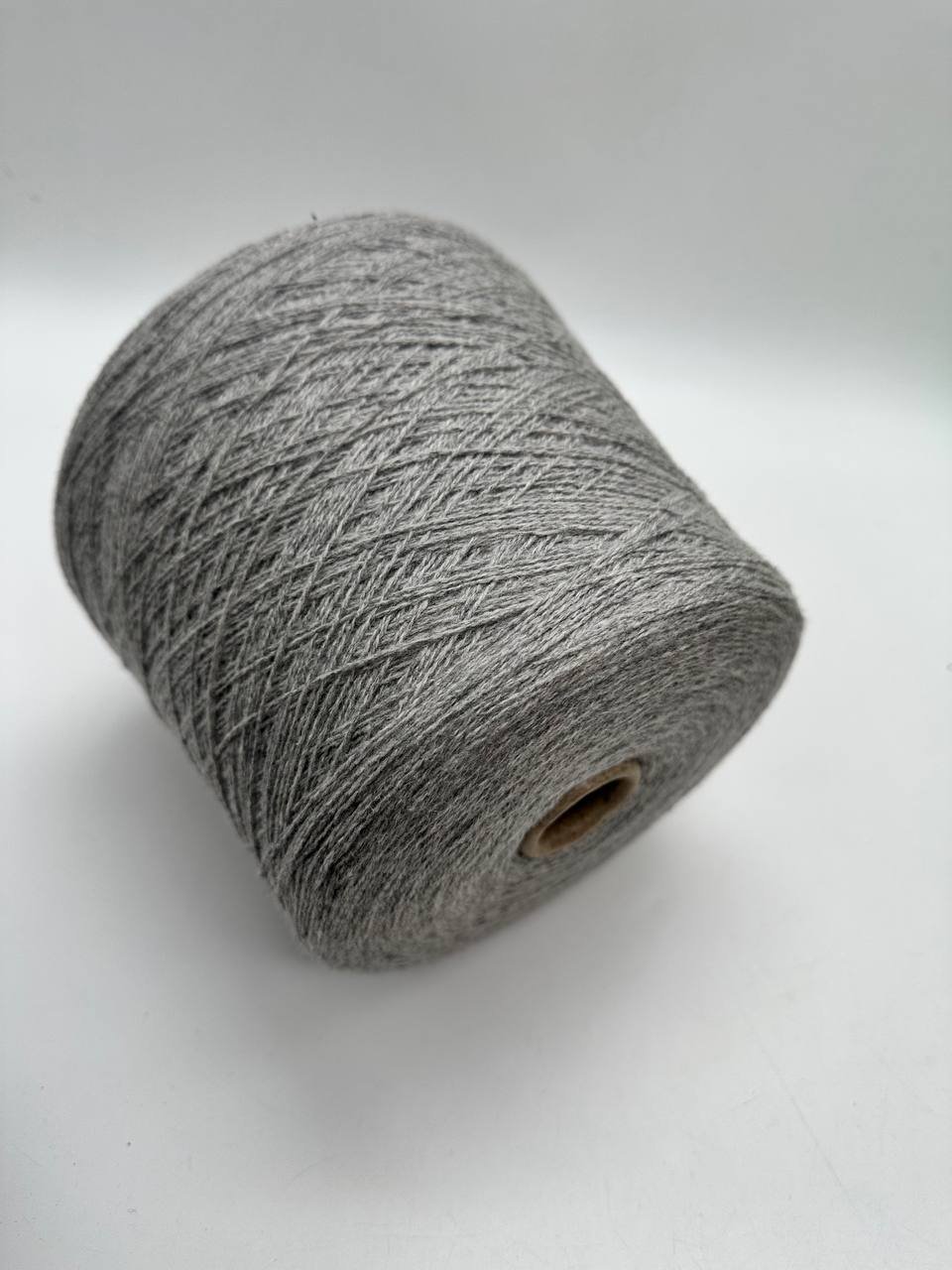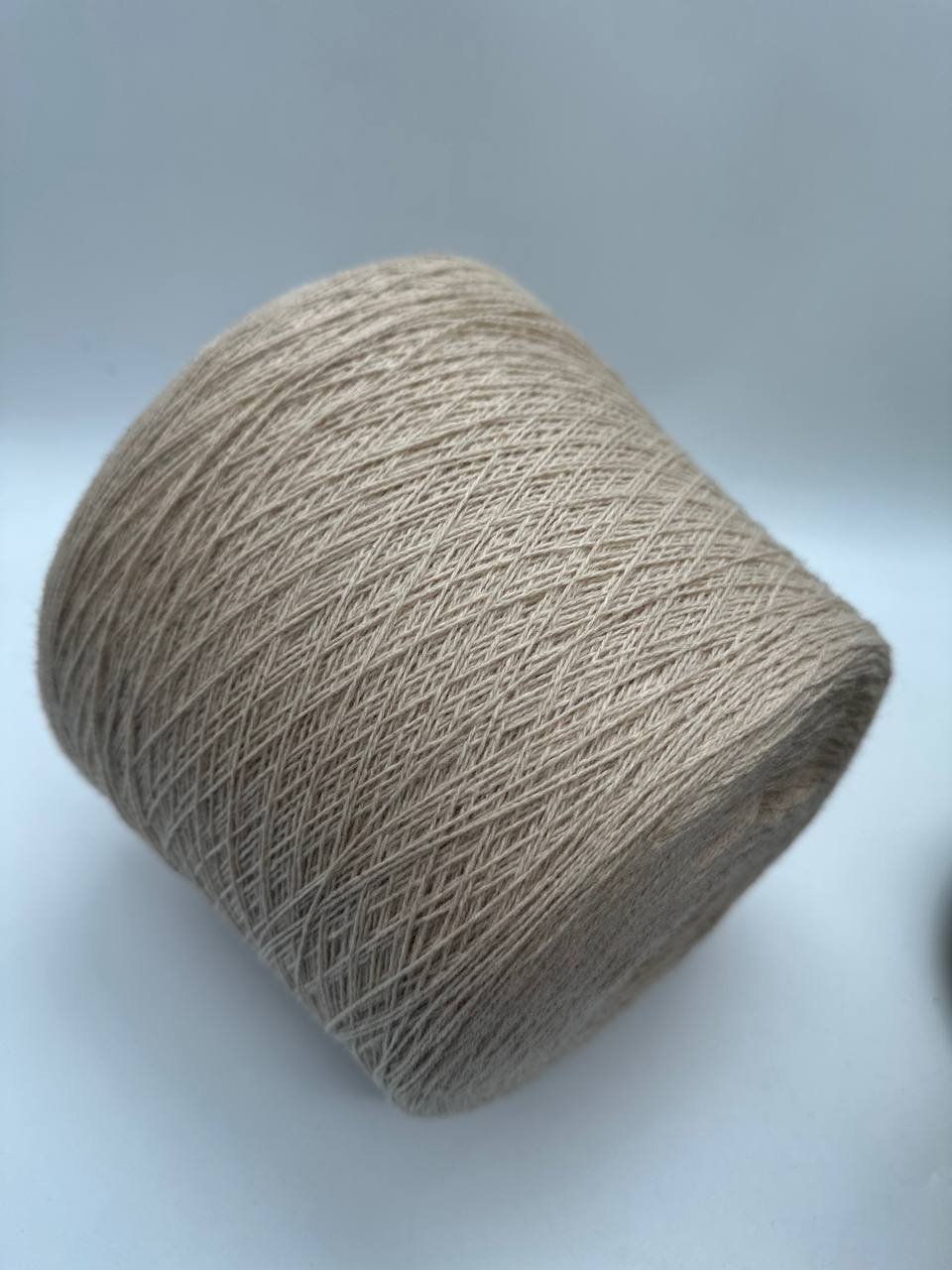
Recycled cashmere uses post-industrial cashmere offcuts that would otherwise be discarded; virgin cashmere comes straight from the goat. The recycled version is cheaper and lower-impact, but the fibers are shorter, so it pills faster and feels slightly less buttery than virgin. For most knitwear projects either works — the choice comes down to price, project lifespan, and how visible the surface texture will be.
At Italiana Filati Pregiati we have worked with yarn from Biella-area mills for two generations. This article is the practical comparison we would give a buyer choosing between the two for the first time, written from handling both at the cone.
What "Recycled Cashmere" Actually Means
There are two distinct sources, and they are not equivalent:
Post-industrial recycled cashmere is the offcut and short fiber that piles up during virgin cashmere spinning. Mills sort it, often by color, then re-card and re-spin it back into yarn. This is what the overwhelming majority of "recycled cashmere" on the European market actually is.
Post-consumer recycled cashmere is shredded back from used garments. This is much rarer in commercial yarn supply because separating cashmere garments from blends, removing hardware, and matching colors is expensive. When you see post-consumer recycled cashmere, it is usually a sustainability-focused brand making a deliberate statement.
A note on certifications: the standards that apply to recycled cashmere are GRS (Global Recycled Standard) and RCS (Recycled Claim Standard), both administered by Textile Exchange. RWS — despite appearing in some supplier composition codes — is the Responsible Wool Standard and applies only to virgin wool from certified farms. When a Millefili composition string reads "97RWS 3RWO" the "R" prefix is the supplier's shorthand for "recycled" applied to the European fiber abbreviation system (WS = cashmere, WO = wool), not the RWS certification.
How Italian Mills Make It
The Biella valley invented modern cashmere processing, and the same expertise applies to recycled stock. Mills like Cariaggi, Biagioli Modesto, and Millefili source bales of offcut already segregated by color — a critical step, because re-dyeing recycled cashmere shortens fiber life and adds chemical cost. The bales are opened, carded mechanically (no chemical de-felting is needed because the fiber was never knitted into a finished garment), spun on the same Saurer and Schlumberger machines used for virgin lots, and finished with the same Italian washing protocols.
The result is yarn that is recognizably cashmere on the cone — soft, with the characteristic dull lustre — though the experienced hand will notice it feels slightly shorter and less continuous than virgin.
Recycled vs Virgin: Side-by-Side
| Property | Recycled cashmere | Virgin cashmere |
|---|---|---|
| Fiber length | ~20–30 mm (shortened by re-carding) | ~30–45 mm (full natural staple) |
| Fiber diameter | 14–19 µm (unchanged) | 14–19 µm |
| Initial softness | Very soft, near virgin | Buttery, the benchmark |
| Pilling tendency | Higher (shorter fibers) | Lower |
| Color range | Limited to source-bale colors | Full dye range |
| Typical price | 20–50% below virgin | Premium |
| Best certification | GRS / RCS | CCMI label where claimed |
| Sustainability story | Diverts mill waste from landfill | Higher land, water, welfare footprint per kg |
Numbers above are typical European spinning ranges; specific lots vary by mill.
Which to Choose for What Project?
Honest guidance from someone who handles both:
- Outerwear, accessories, sweaters that will not touch bare skin — recycled is excellent. The pilling difference is real but slow to appear, and at 20–50% lower cost the trade-off is sensible.
- Sample knitting, swatching, learning a new stitch pattern — recycled, every time. There is no reason to burn virgin yardage on tests.
- Next-to-skin garments, baby clothes, lightweight intimate knits — virgin. The longer fibers feel meaningfully smoother against thin skin and pill less in high-friction areas.
- Heirloom pieces, gifts meant to last decades — virgin. The longer staple genuinely outlasts recycled in 20-year wear tests.
- Anything Nm 2/12 or heavier (chunky outerwear, blankets, beanies) — either, but recycled hides its slight texture difference better in coarser counts.
A Real Example: Millefili AlterEco
We currently stock Millefili AlterEco (view product), 97% recycled cashmere and 3% recycled wool, in a worsted Nm 2/12 count (about 600 m per 100 g). It is Millefili's sustainability line — "AlterEco" reads as alter- + eco, alternative ecology — and the yarn is sorted by color at the mill so no re-dyeing is required.
At Nm 2/12 it suits sweaters, cardigans, blankets, beanies, and any project where you want cashmere hand without the fragility of a fine-count yarn. We carry it on cone, which is the form most knitters and small workshops prefer for sustained projects.
In purely cost terms, an Nm 2/12 cashmere yarn from a comparable Italian mill at virgin grade typically runs in the higher end of the cashmere price band per kilogram. The AlterEco lot sits visibly below that line — exactly the 20–50% recycled vs virgin spread referenced in the table above. We do not publish per-kilogram pricing publicly; ask for a current quote and we will share what is on the cone right now.
The Sustainability Math
Every kilogram of recycled cashmere displaces roughly a kilogram of virgin demand. Since a cashmere goat produces about 150–200 g of usable down per year, one kilogram of recycled fiber represents roughly 5–7 goats not needed to supply it.
The honest caveat: post-industrial recycled cashmere is not a closed loop. The waste it diverts would have existed regardless — it is a virgin spinning by-product. So while choosing recycled does materially reduce demand-side pull on Mongolian and Chinese herds, it does not undo virgin production. Post-consumer recycled (rare, expensive) is closer to a true loop, but supply at commercial scale is not there yet.
In Short
Recycled cashmere is real cashmere, made by the same Italian mills, on the same machines, with a slightly shorter fiber and a meaningfully lower price. For most projects it is the right call. For garments that need to last decades or sit against thin skin, virgin still earns its premium.
Browse our cashmere catalog for current stock. For more context see our companion articles Cashmere: King of Luxury Fibers and Cashmere vs Merino, or the encyclopedia for fiber reference.